
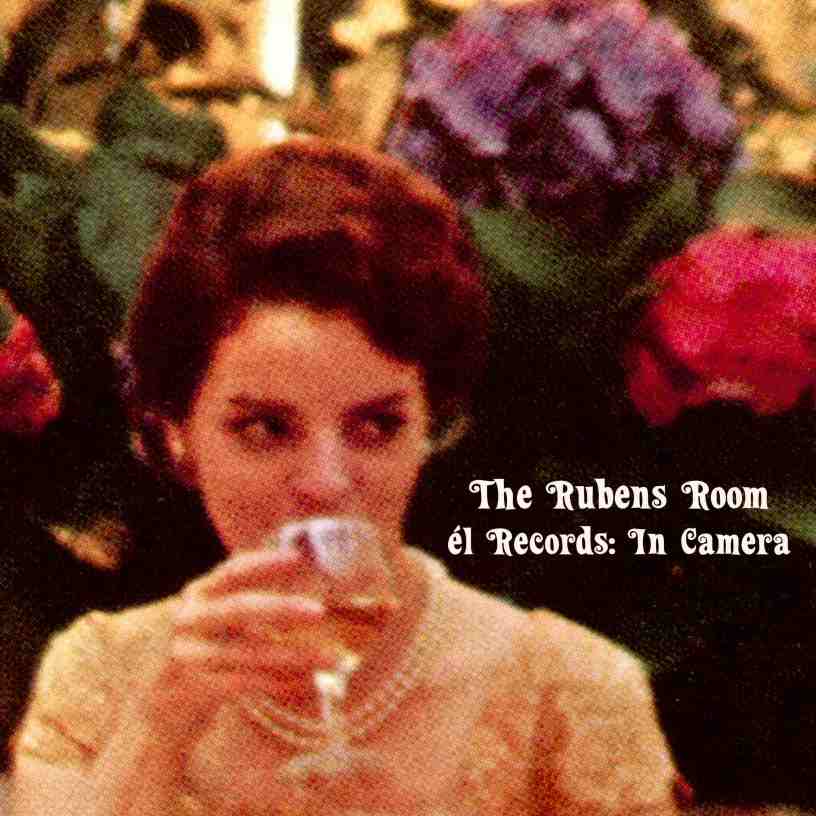

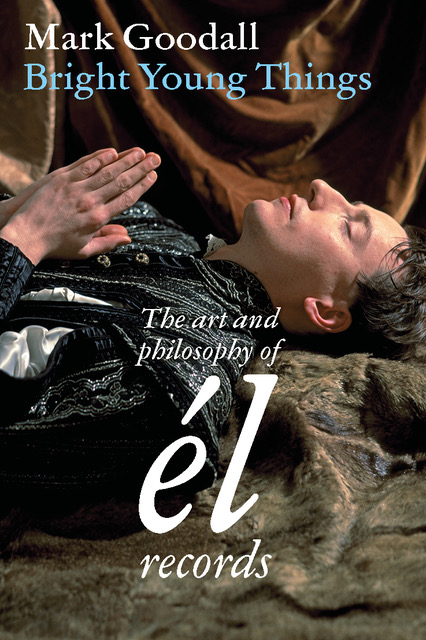
The short-lived, brightly burning, él records is doubly commemorated this coming April with the publication of Mark Goodall’s Bright Young Things: The Art and Philosophy of él Records – a 200-page account of the él story – and the release of the two-album compilation The Rubens Room: él Records In Camera on Tapete Records.
él Records was created in 1984 by Mike Alway. Alway had been the A&R man at Cherry Red Records signing artists among others Everything But the Girl, The Monochrome Set, and Felt. He’d also gathered a fascinating contingent of performers and acts, such as Kevin Coyne, Eyeless In Gaza, and Morgan Fisher, who either pre-dated the 1976/77 upheavals or acted oblivious to them.
The 1981 compilation Perspectives & Distortion perhaps best serves as the label’s blueprint though it is now overshadowed by the following years Pillows & Prayers which, selling for 99p, stayed top of the indie charts for nineteen weeks, and inter alia introduced many people to The Misunderstood.
Two decades later Alway would comment of it; “Its highly melodic and avant-garde constitution was encouraged by the lighter more textural contemporary output of Factory (Durutti Column) and Rough Trade (Young Marble Giants) and historically owed more than a little to artists of the previous generation who had survived punk’s purges: Can, Ennio Morricone, and The Mothers Of Invention”
Alway had left Cherry Red to help run Blanco Y Negro but very quickly felt constrained by the conservativism of the commercial music sector and left to set up his own label. It became “the most innately English record label there has ever been” and yet had a global appeal. Alway took complete control of the repertoire, the philosophy of the label’s releases and even the titles of songs. He acted as curator and selector, shaping and overseeing the records él released. He took on songwriters proficient in classical pop techniques such as Nicholas Currie (aka Momus) and Philippe Auclair (aka Louis Philippe) who in addition to issuing their own records wrote, arranged. and performed for other él artistes ,and used creative talents such as photographer Nick Wesolowski and designer Jim Phelan to create an él ‘look’.
él had a unique flavour eschewing the traditions of mid-1980s rock and indie music, exhibiting instead a taste for 1960s bubblegum and chamber pop, the European chanson tradition, Latin rhythms, and film scores (another of él’s key players was child prodigy Simon Turner who wrote music for Derek Jarman’s movies). The ethos of the label was decidedly un-macho and many of él’s key artists were female. The first single ‘I, Bloodbrother Be’ by Shock Headed Peters was an uncompromising gay anthem. Alway saw él as a celebration of elegance and beauty, in his own words, “a pop world beyond leather jackets and jeans”.
While record sales were disappointing, this unique blend was critically acclaimed in the UK and popular in America and mainland Europe, while in Japan él had a profound effect, directly influencing the Shibuya-kei phenomenon that included Pizzicato Five, Cornelius and Kahimi Karie.
Alway’s él Records lasted four years. He would then have a series of labels – Exotica, Richmond, If…., Reverie – still pursuing his visions. Twenty years ago he would reconnect with Cherry Red, and él Records was revived as a curated repackage and reissue imprint.
Bright Young Things is the first book to tell the fascinating story of those first four years (and what came after) while The Rubens Room anthologises the performers of those times, among them The King Of Luxembourg, Momus, Louis Philippe, Marden Hill, Anthony Adverse, Would-Be-Goods, and Bad Dream Fancy Dress.
Bright Young Things: The Art and Philosophy of él Records is published on 14th April by Ventil Verlag while The Rubens Room: él Records In Camera is released by Tapete Records three days before on the 11th April.
 Bucketfull Of Brains